In the Hoop Mug Rug: A Designer's Real-World Review
As a designer who has spent years evaluating digital assets for both personal craft projects and commercial small business ventures, I approach every new embroidery file with a mix of excitement and skepticism. The market is flooded with "perfect" designs that often fail when they hit the hoop. Today, I am putting the In the Hoop Mug Rug through its paces to see if it truly delivers on its promise as a versatile machine embroidery design for home decor and gift-giving.
First Impressions: Mood and Visual Personality
The moment you open the package or preview the files, the In the Hoop Mug Rug exudes a cozy, rustic charm that feels perfectly suited for modern farmhouse aesthetics. Unlike generic patterns that feel mass-produced, this design carries a specific visual weight. It suggests warmth, functionality, and a touch of nostalgia. The layout appears balanced, likely utilizing a combination of satin stitch for clean edges and fill stitch for texture, which immediately signals quality to a potential buyer.
For an Etsy seller or boutique owner, the mood matters just as much as the technical specs. This design doesn't just fill space; it tells a story about a slow-living lifestyle. It fits naturally into the House category but transcends it by offering a product that feels handmade yet achievable. The concept of creating a quilt block-style pot holder or placemat within a single hoop operation is appealing because it reduces assembly time while maximizing the perceived value of the finished item.
Real-Life Application: From Digital File to Finished Product
Let's imagine a real scenario. You are preparing for the holiday season, a peak time for craft business revenue. You need a unique, personalized gift that stands out from standard mugs or candles. You decide to create custom embroidered kitchen towels featuring the In the Hoop Mug Rug design. The goal is to offer these as part of a "Hostess Gift" bundle for your online shop.
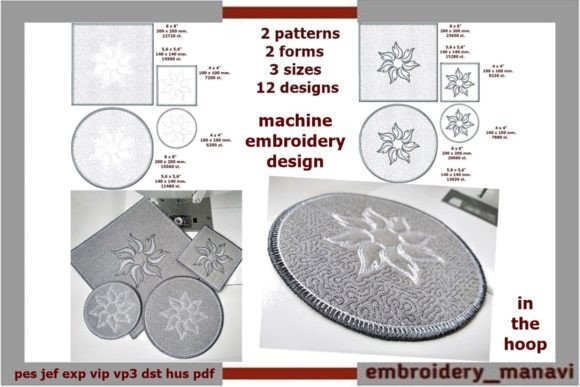
When executing this project, the efficiency of an in-the-hoop (ITH) design becomes obvious. Instead of cutting, sewing, and stuffing multiple layers separately, the machine handles the construction. This allows you to produce high-quality handmade products at a pace that makes sense for a small shop. Imagine the reaction of a customer receiving a tea towel with a built-in mug rug pocket, complete with intricate stitching that looks professional and durable. The tactile experience of the finished product elevates the brand perception significantly.
This versatility extends beyond kitchen items. While primarily designed for home use, the aesthetic works beautifully on custom apparel like aprons worn by chefs or baristas. It could also be adapted for baby items, such as a bib or a soft blanket border, provided the scale is adjusted correctly. The design acts as a strong anchor for a collection, allowing you to expand into matching placemats or napkins without reinventing the wheel.
Technical Performance and Stitch Clarity
From a technical standpoint, the success of any embroidery project relies heavily on stitch density and how well the design interacts with different fabrics. The In the Hoop Mug Rug seems to rely on clear definition to make the "quilt block" look authentic. If the stitch density is too low, the design might look sparse and cheap; if it is too high, the fabric may pucker, especially on thinner materials.
When testing this design on various backgrounds, contrast is key. On a light-colored cotton tea towel, the thread colors will pop, creating a crisp, clean look. However, if you attempt to use this on dark fabric, you must ensure there are enough underlay stitches to prevent the base color from showing through. For a commercial embroidery job, consistency is everything. You cannot have one batch looking vibrant and another looking dull. The design's structure should allow for easy thread changes to achieve depth and dimension.
I also considered the durability aspect. Since this item is intended for kitchen use—potentially involving heat, water, and friction—the stitching must hold up. Designs that rely solely on delicate running stitch for structural integrity might fray over time. The inclusion of robust satin stitch borders is crucial here. Before committing to a large production run for an Etsy listing, I would recommend washing and drying a sample piece to ensure the threads do not bleed or loosen.
Where Caution is Required
No design is universally perfect, and knowing where to draw the line is part of being a professional. There are specific scenarios where the In the Hoop Mug Rug might struggle. First, consider the hoop size. If the design requires a larger area than your machine supports, you will face limitations. Small hoops can sometimes distort the geometry of complex shapes, making the "mug rug" look squashed or misaligned.
Textured fabrics present another challenge. If you try to embroider this on a thick, looped terrycloth or a heavy canvas without proper stabilization, the needles might deflect, ruining the detail. Similarly, stretchy fabrics like jersey or knits require careful handling. Without a strong stabilizer, the tension of the stitches could cause the garment to warp, rendering the finished product unusable.
Detailed corners are another potential pitfall. If the design includes tiny lettering or intricate geometric corners, these elements can get lost on curved surfaces like caps or rounded tote bag bottoms. Furthermore, if the design involves dense fill areas, using it on thin fabric without adequate backing can lead to visible puckering on the reverse side, which detracts from the professional look. Always inspect the design carefully for these details before purchasing or using it for client work.
Designer Notes for Success
To get the most out of this digital embroidery file, practical preparation is non-negotiable. Start by running a test on scrap fabric that matches your final material. This simple step reveals issues with thread tension, stabilizer choice, and fabric behavior before you commit to a saleable item.
Check your thread colors against the design intent. Sometimes, a colorway that looks great on a screen appears muddy in physical thread. Use a black and white mockup to check the contrast and legibility of the design elements. Ensure you are using the correct type of stabilizer; cut-away stabilizers are often better for items that will be washed frequently, while tear-away might suffice for decorative pieces.
If you are planning to sell finished items made from this design, review the licensing terms thoroughly. Are you allowed to use this for commercial embroidery? Does the license cover unlimited sales, or is there a cap? Confirming these details protects your business from legal trouble. Additionally, compare the design against similar assets in your library to ensure it offers something unique to your customers.
Final Thoughts on Value and Presentation
The In the Hoop Mug Rug represents more than just a pattern; it is a tool for building a cohesive brand identity. When executed well, it enhances the perceived value of your small shop product and fosters trust with buyers who appreciate quality craftsmanship. It bridges the gap between digital convenience and tangible artistry.
Whether you are a hobbyist looking to create a special personalized gift for a friend, or a seasoned entrepreneur expanding your design assets catalog, this design offers a solid foundation. It encourages creativity while providing a structured path to a polished result. By understanding its strengths and respecting its limitations, you can integrate it seamlessly into your workflow, creating beautiful, functional pieces that resonate with anyone who loves the art of embroidery.